ADHD Diagnosis
Adult ADHD Diagnostic Evaluator
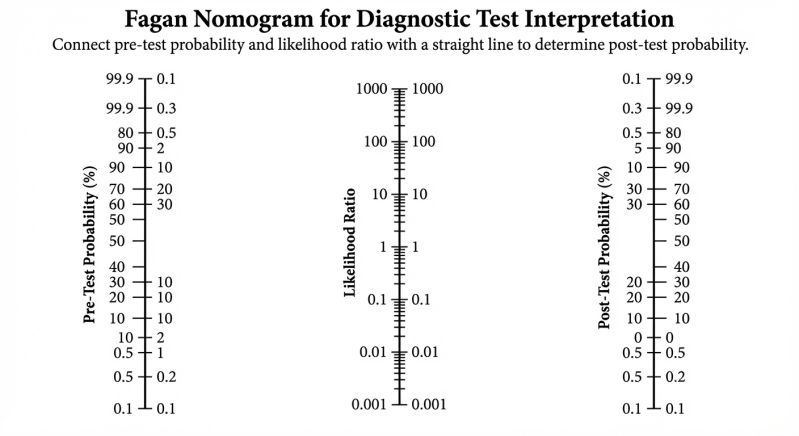
Bayesian analysis using ASRS-v1.1 scores and patient risk factors.
Step 1: Determine Pre-test Probability
Baseline US Prevalence assumed at 7%. Check all factors that apply to the patient.
Step 2: Enter ASRS Screener Score
Enter the total score from the patient's ASRS-v 1.1 measurement.
Evaluation Results
Calculation Summary
| Metric | Value |
|---|---|
| Calculated Pre-test Probability | - |
| ASRS Score (Cut-off Used) | - |
| Positive Likelihood Ratio (+LR) Applied | - |
| Final Post-Test Probability | - |
Reference: ASRS-v 1.1 Likelihood Ratios
| ASRS Cut-Off | Sensitivity | Specificity | +LR | -LR |
|---|
Summary of ADHD Evaluation
Alternative Explanations: Check if any of the following are true
-Negative childhood ADHD symptoms from collateral
-Negative academic problems
-Presence of anxiety or mood disorder that explains the presentation
-Presence of Avoidant traits or perfectionism that explains the presentation
-Lack of response to classic stimulants in the past
References:
Kessler RC, Adler LA, Gruber MJ, Sarawate CA, Spencer T, Van Brunt DL. Validity of the World Health Organization Adult ADHD Self‐Report Scale (ASRS) Screener in a representative sample of health plan members. Int J Methods Psych Res. 2007;16(2):52-65. doi:10.1002/mpr.208
Brevik EJ, Lundervold AJ, Haavik J, Posserud M. Validity and accuracy of the Adult Attention‐Deficit/Hyperactivity Disorder (ADHD) Self‐Report Scale (ASRS) and the Wender Utah Rating Scale (WURS) symptom checklists in discriminating between adults with and without ADHD. Brain and Behavior. 2020;10(6):e01605. doi:10.1002/brb3.1605